The Flat-Front Revolution: Why the Monterey Elite's European-Style Bow Is Winning American Buyers
The Monterey Elite's striking 'flat front' is not just a style choice — it is a vertical stem bow borrowed from Europe's top adventure boat builders like Axopar, Nimbus, and Beneteau. Here is what it means on the water, and why American buyers are choosing it over traditional bowrider designs.
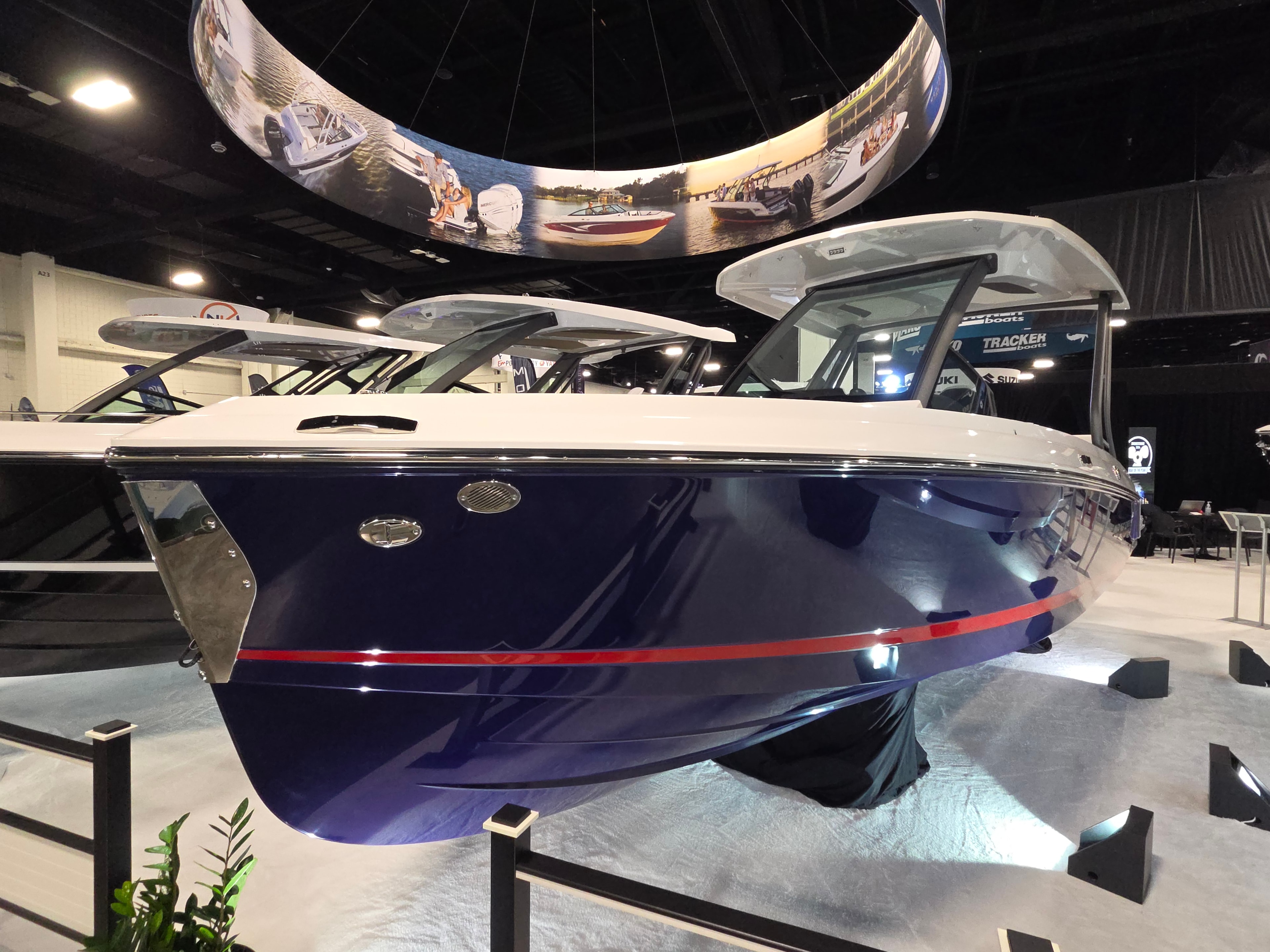
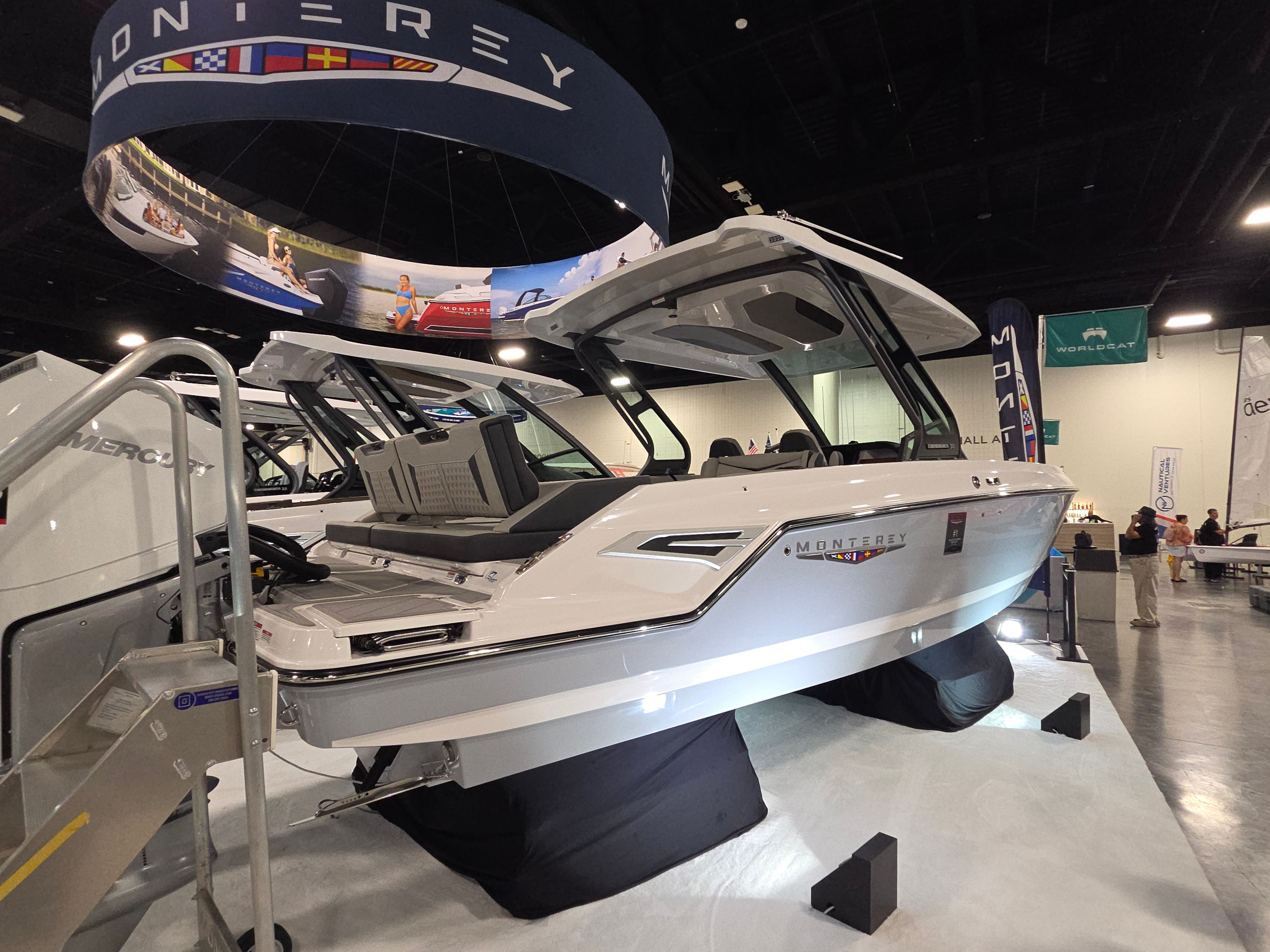
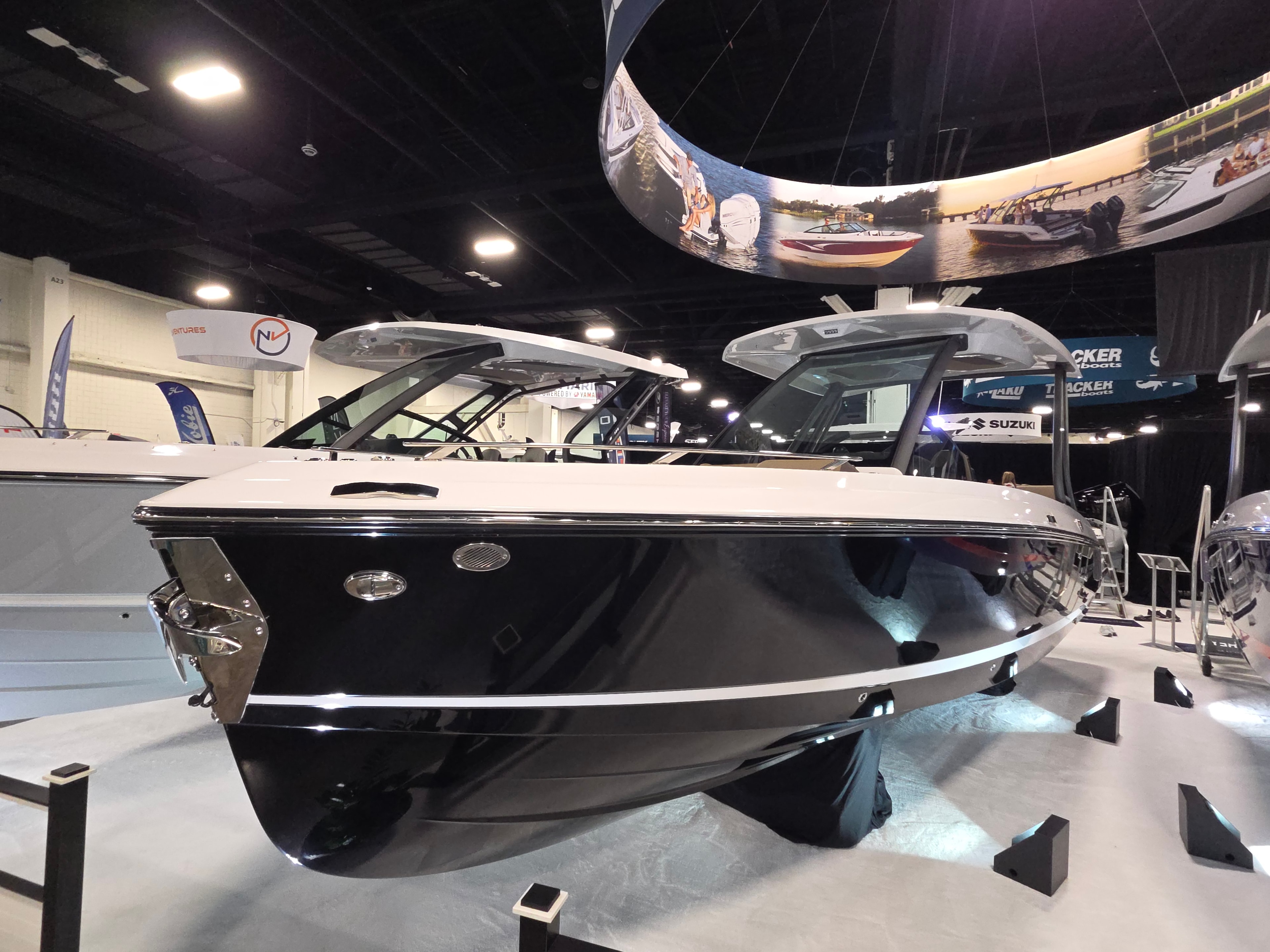
Walk up to a Monterey Elite at a boat show and the first thing buyers notice is the bow. It does not look like any American bowrider they have seen before. It is blunt, vertical, almost aggressive — more like something you would see tied up in a Scandinavian harbor than at a Georgia marina.
That is not an accident. The Monterey Elite's vertical stem bow — what buyers are calling the "flat front" — is a direct import of European adventure boat design philosophy. And it is the single biggest reason the Elite Series is pulling buyers away from traditional American bowriders.
As the authorized Monterey dealer at Lake Lanier, we have had more conversations about this bow design in the last year than about any other feature on any boat we sell. Here is the full story on what it is, where it came from, and what it actually does on the water.
Where the Design Came From: Axopar, Nimbus, and the European Adventure Boat
For the last decade, Europe's premium dayboat market has been dominated by a completely different design philosophy than America's. While American builders were refining the traditional swept-bow bowrider, European brands like Axopar (Finland), Nimbus (Sweden), and Jeanneau/Beneteau (France) were building what they call "adventure boats" — crossover dayboats with vertical stem bows, center-console helm structures, and hulls designed for rough offshore water.
The Axopar 37 is the most recognized example. Its plumb bow, square profile, and utilitarian deck layout became the benchmark for a generation of European buyers who wanted a boat that could handle the Baltic Sea, the English Channel, and a weekend sandbar with equal competence.
Monterey looked at that design language and did something no major American builder had done before: they Americanized it. They kept the vertical stem bow, the center-console helm structure, and the rough-water hull geometry — and then filled the interior with the deep-cushion seating, convertible lounges, and social layouts that American lake and coastal buyers expect.
The result is the Elite Series. And buyers on forums like Reddit's r/boating have noticed — the comparison to Axopar comes up constantly in Elite discussions.
1. The Vertical Stem Bow: What It Actually Does
The technical name for the "flat front" is a Vertical Stem (VST) bow design. It looks dramatic at the dock. On the water, it is an engineering decision with real performance consequences.
The traditional swept bow problem: A conventional bowrider bow sweeps back at an angle. When the boat accelerates, the bow rises — sometimes dramatically — before the hull planes out. In chop, the angled bow rides up over waves and then slams down. The longer the bow overhang, the more pronounced the slam.
What the VST changes: Monterey's vertical stem bow eliminates the overhang. The hull's running surface extends all the way to the bow, adding 3 to 5 feet of effective waterline length without increasing the boat's trailerable footprint. The practical results:
- Reduced bow rise on acceleration — the boat gets on plane faster and with less drama
- Chop-slicing instead of chop-riding — the blunt bow cuts through waves rather than riding up and slamming down
- Deeper deadrise at the bow — more hull in the water means a more planted, stable feel at speed
- Lower planing speed — the extended waterline lets the hull plane at lower RPM, improving fuel economy at cruise
Independent testers have noted that the Elite 30 rides and handles with the stability of a traditional 35-foot boat. That is the VST bow at work — you get the trailerable footprint of a 30-footer with the on-water behavior of something significantly larger.
2. The Crossover / Adventure Deck Concept
European adventure boats are not bowriders. They are not center consoles. They are a third category — a crossover that takes the walkaround structure of a center console and combines it with the social seating of a dayboat.
Monterey adopted this concept wholesale for the Elite Series, with one critical modification: they kept the rugged EU hull and profile but replaced the European minimalism with American comfort.
The European version (Axopar, Nimbus): Utilitarian, sparse, built for offshore capability. Excellent hull. Functional seating. Not designed for a full day of sandbar entertaining with a group of eight.
The Monterey Elite version: Same VST hull geometry and center-console structure. But the interior is packed with plush bow seating, convertible L-shaped lounges, premium upholstery, and a social layout designed specifically for lake and coastal entertaining. The hardtop provides full shade across the entire cockpit. The rotating helm seats spin around to face the group when anchored.
It is the best of both worlds — offshore capability and rough-water performance from the European hull, American comfort and social layout from Monterey's 40 years of building boats for families.
3. The Glass Cockpit and the Frameless Hardtop
European builders are obsessed with clean, automotive-grade helm stations. Walk up to an Axopar or Nimbus helm and you see a single large screen, minimal physical buttons, and a layout that reads more like a luxury car than a traditional boat.
Monterey brought this philosophy to the Elite Series with the Simrad Ultra-Wide MFD — a single massive 14- to 15-inch display flush-mounted into a clean dash, running full digital switching. Lighting, audio, and engine parameters all managed from the glass screen. Integrated wireless phone chargers and USB ports at the helm. Almost no physical buttons.
The hardtop follows the same European engineering logic. Rather than a canvas bimini or a lightweight bolt-on top, the Elite's hardtop uses a three-point mounting system that anchors the frame directly into the console edge and gunwales. The result is a top that is completely rattle-free at 50+ mph — the same structural approach used on European commuter boats designed for open-water crossings.
4. Where Monterey Diverges From the European Original
The Monterey Elite is not an Axopar. It is not trying to be. The divergence is intentional and it is what makes the Elite work for American buyers.
European adventure boats are built for offshore passage-making. They are optimized for rough water, long range, and a small crew. The seating is functional. The layout is efficient. The aesthetic is purposeful and spare.
The Elite is built for American lake and coastal entertaining. The VST hull and center-console structure give it the offshore capability. But the interior — the deep-cushion bow seating, the convertible lounges, the full hardtop shade, the rotating helm seats, the premium upholstery — is designed for a full day on Lake Lanier with eight people who want to be comfortable.
Monterey took the European hull philosophy and applied American hospitality to the interior. That combination is exactly what buyers who have been shopping traditional bowriders are responding to.
The Hybrid Result: Why Buyers Are Choosing It
The buyers switching to the Elite Series are not choosing it because it looks European. They are choosing it because it solves problems that traditional American bowriders have never solved:
- The bow rise problem — the VST hull planes faster and more smoothly than any swept-bow bowrider they have owned
- The rough water problem — the deep-V hull with VST bow handles Lake Lanier's afternoon chop and coastal conditions that would beat up a traditional bowrider
- The head compartment problem — the center-console structure enables the stand-up, full-width head that no traditional bowrider can offer
- The shade problem — the structural hardtop provides full cockpit shade that a canvas bimini cannot match
- The tech problem — the Simrad glass cockpit makes every other helm in the segment feel like a previous generation
The flat front is the most visible signal that the Elite Series is a different kind of boat. But the design runs all the way through — hull geometry, helm technology, interior layout, and construction philosophy.
See the Flat Front in Person at Lake Lanier
We are the authorized Monterey dealer at Lazy Days Marina on Lake Lanier in Buford, GA. We have Elite Series inventory in stock and can arrange a demo on Lake Lanier so you can feel what the VST bow does in real Georgia conditions — specifically in the afternoon chop on the main channel that beats up traditional bowriders.
If you have been shopping Axopar or Nimbus and want to see how the Elite compares, or if you have been shopping Cobalt and Regal and want to understand why the flat-front design is winning, come in. The bow tells the story at the dock. The hull tells the rest of it on the water.
Call us at (678) 725-3749 or explore the full Monterey Elite lineup to see what is in stock right now.
Explore Topics
Written by
Carefree Boat Sales Team
Content creator and writer sharing insights and stories.